Risks to critical minerals supply chains continue to grow, with highly concentrated supply, new export restrictions and declining investment all compounding one another, according to International Energy Agency analysis reported in July 2026. The framing has changed: what was treated as a structural vulnerability is now being described as an active economic security challenge.
Export controls change the calculus
"Our latest analysis shows that vast amounts of economic value depend on relatively small volumes of critical minerals, whose supply chains remain highly concentrated and are therefore vulnerable," said IEA executive director Fatih Birol. The report warns that new export controls have turned supply concentration from risk into reality, citing increases in China's export controls, a cobalt export quota introduced by the Democratic Republic of the Congo, and trade restrictions by Zimbabwe for lithium and Mozambique for graphite.
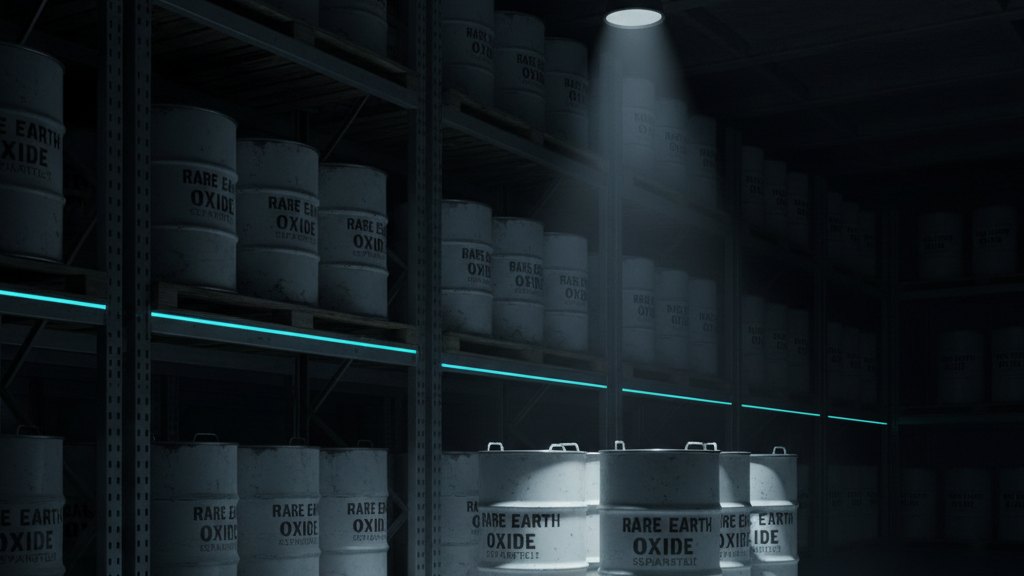
The scale of exposure is the striking part. In April 2025 China introduced major export controls on seven heavy rare earth elements, expanded further in October. Although the expanded measures were suspended for one year until November 2026, the IEA said their full implementation could put USD 6.5 trillion per year of downstream production outside China at risk across the automotive, high-tech, defence and energy sectors. China has also announced export controls on cathode materials, cathode precursors and graphite anode materials, and on battery manufacturing equipment and technologies; full disruption of the battery-grade graphite trade would place over USD 300 billion per year of downstream production outside China at risk.
Definitions, intensity and the policy response
What counts as critical varies by jurisdiction. In November 2025 the US Geological Survey published a list of 60 critical minerals; the European Union's Critical Raw Materials Act lists 34 materials, as does the UK's 2024 Criticality Assessment. The underlying material intensity explains the attention: electric vehicles require around six times more mineral inputs than conventional cars, and offshore wind facilities around thirteen times more mineral resources than gas-fired power plants.
Prices have followed. As SCI's account of why supply chain worries have become reality notes, lithium prices more than doubled amid strong storage demand and constrained supply, prices for strategic minor minerals more than doubled, and tungsten rose sixfold. In Europe, gallium and the heavy rare earths dysprosium and terbium trade at five times Chinese domestic prices. Governments have responded with resilience measures, including United States critical minerals agreements with the European Union, Japan and other countries earlier in the year.
The exergy view
The mineral intensity figures are usually read as a materials problem, but they are equally a statement about embodied exergy. Six times the mineral input for an electric vehicle, thirteen times for offshore wind, means a correspondingly larger cumulative exergy demand locked into the equipment before it produces anything — an investment that is repaid only by decades of avoided fuel destruction. That trade is normally favourable, but it shifts the burden upstream to mining and separation, the most exergy-intensive steps in the chain. Export controls act on the narrowest and most work-intensive point: heavy rare earth separation and battery-grade graphite purification. Small tonnages carry disproportionate leverage precisely because so much work is embodied in each kilogram.