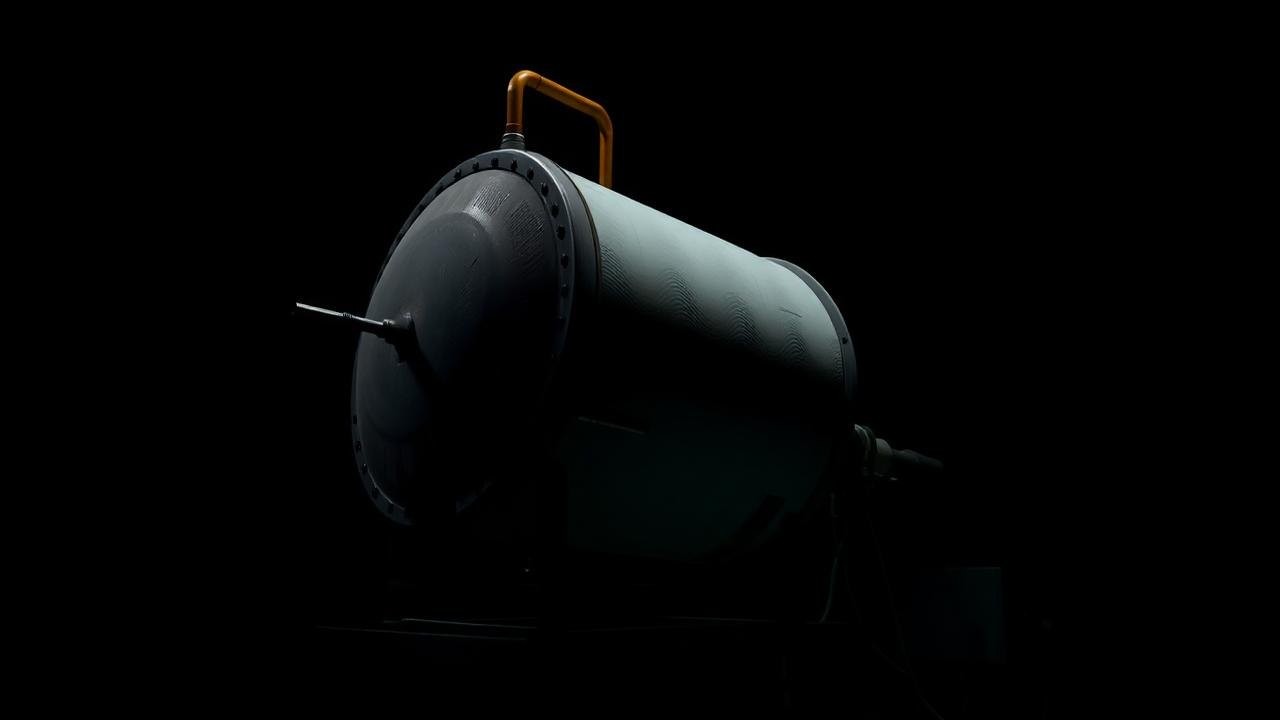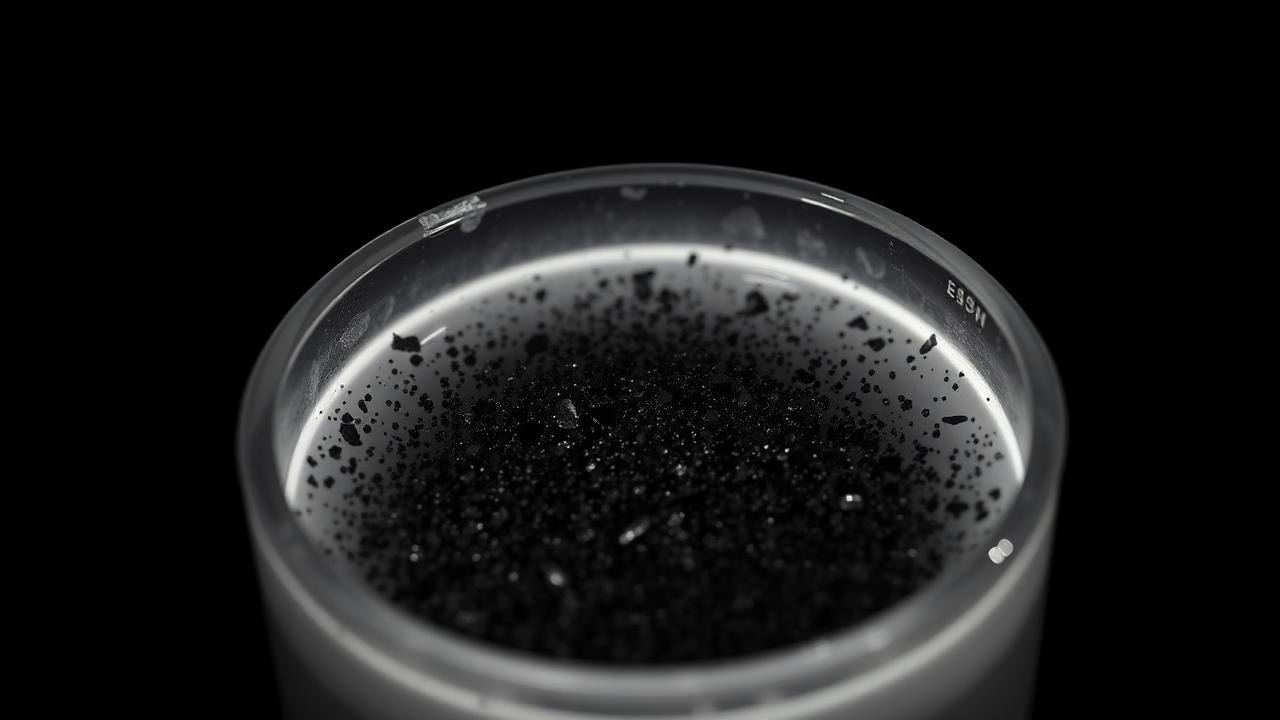

Nanofluid papers have a credibility problem: many report laboratory loops under controlled irradiance and quietly omit pumping power. This open access study in the Journal of Composites Science avoids both criticisms. It runs a closed-loop evacuated tube solar collector under real tropical weather, and reports entropy generation, Bejan number and pumping power alongside the efficiency figures.
The measured result
The test matrix covers volumetric flow rates of 0.5, 1 and 1.5 L/min and graphene nanoplatelet mass fractions of 0.025, 0.5, 0.075 and 0.1 wt%. At the best combination — 1.5 L/min and 0.1 wt% — exergy efficiency reaches about 85.5% and thermal efficiency about 90.7%. Entropy generation falls as concentration rises, which is the internally consistent result: the nanoplatelets improve the effective thermal conductivity of the working fluid, the absorber-to-fluid temperature difference narrows, and the irreversibility associated with that difference drops.
The Bejan number behaviour is the part worth reading closely. It increases with particle concentration and decreases with flow rate, meaning the balance between heat-transfer irreversibility and fluid-friction irreversibility shifts as the fluid is loaded. That is the mechanism by which nanofluid gains eventually run out: past some loading, viscosity and pumping work grow faster than the heat transfer benefit.
What survives contact with practice
Two caveats travel with any nanofluid result. The first is stability — nanoplatelets agglomerate and settle over months, and a short field campaign cannot show what a five-year duty cycle does to the dispersion. The second is cost: graphene loading of 0.1 wt% is small, but in a circuit holding tens of litres it is not free, and it must be weighed against simply adding collector area.
The exergy view
Solar thermal is the clearest case in energy engineering of a quality mismatch. Sunlight arrives with an exergy content close to its energy content, and a flat plate collector routinely delivers water at 60 °C, converting a near-perfect work source into low-grade heat. Against that backdrop, an 85.5% exergy efficiency measured across the collector is a statement about the collector, not about the resource: it says the device is not adding much destruction on top of the loss inherent in the temperature it targets. The remaining leverage lies in raising the delivery temperature or matching the collector to a load that needs the grade it produces. Nanofluids narrow the temperature difference; they cannot fix a badly chosen target temperature.