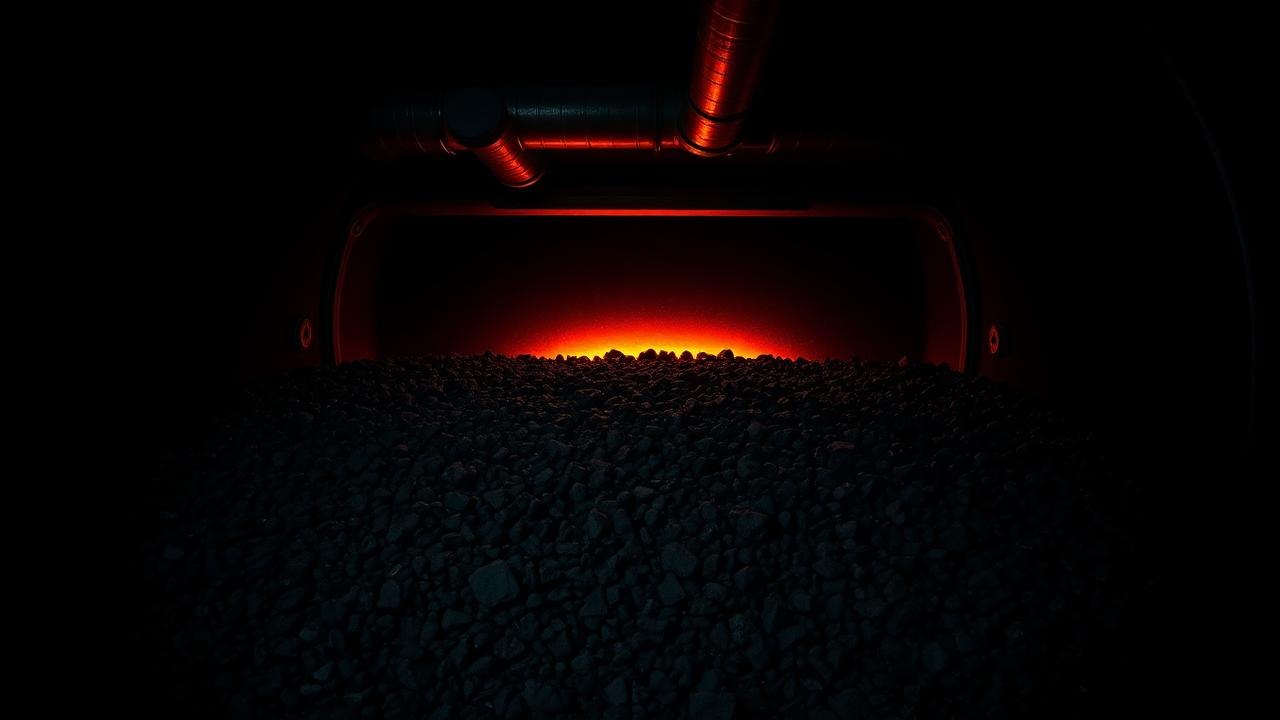
Packed beds are the workhorse of high-temperature thermal storage: cheap solids, air as the working fluid, no pressure containment and tolerance of dirty industrial heat. The open question is what to fill them with. Sensible media are inexpensive and predictable; encapsulated phase change materials store more per unit volume but complicate the flow path and the charge dynamics. This open access study in Energies settles part of that argument by testing both in the same rig.
Why a single rig matters
Comparisons drawn across separate publications are rarely comparable. Bed geometry, void fraction, air velocity, inlet temperature profile and the definition of "charged" all differ, and each of those shifts the result by more than the effect being studied. Holding the vessel, the air loop and the thermocouple layout constant removes that noise, so the difference measured between sensible and latent operation belongs to the medium rather than to the test.
The behaviours diverge in a way that matters operationally. Sensible beds develop a thermocline that moves steadily through the packing, so the outlet temperature drifts continuously and the useful discharge window is bounded by how much drift the process downstream will accept. Latent beds hold the outlet closer to the transition temperature for longer, then fall away quickly once the front reaches the end of the bed. Two stores with similar energy ratings therefore present very different heat to the same load.
Reading it as a design brief
For a process that needs a narrow supply temperature — a dryer, a calciner, a steam raiser with a fixed pressure — the flatter latent discharge is worth paying for, because temperature drift on a sensible bed is not lost energy but lost quality. For a load that can accept a sliding temperature, the sensible bed is usually the better economic answer, and the added complexity of encapsulation buys little.
The exergy view
Rated in energy, a packed bed is a number of kilowatt-hours. Rated in exergy, it is a number of kilowatt-hours held at a stated temperature, and those are not interchangeable. A thermocline that drifts downward through discharge is steadily degrading the work potential of the stored heat even while the energy inventory is unchanged, and any downstream process that needs the original temperature must make up the shortfall from a higher-grade source. The value of the latent route is that it defends temperature, which is to say it defends exergy. Until storage is procured on a temperature-qualified basis rather than on capacity alone, that distinction will keep being bought by accident.