Finnish cleantech start-up TheStorage has installed its first industrial-scale sand-based heat storage system, commissioning a pilot at a brewery in January 2026 where it produces fossil-free steam for production lines. The installation matters because industrial process heat, not electricity, is the harder half of industrial decarbonisation, and thermal storage is one of the few routes that lets an intermittent power supply serve a continuous heat demand.
How the system works
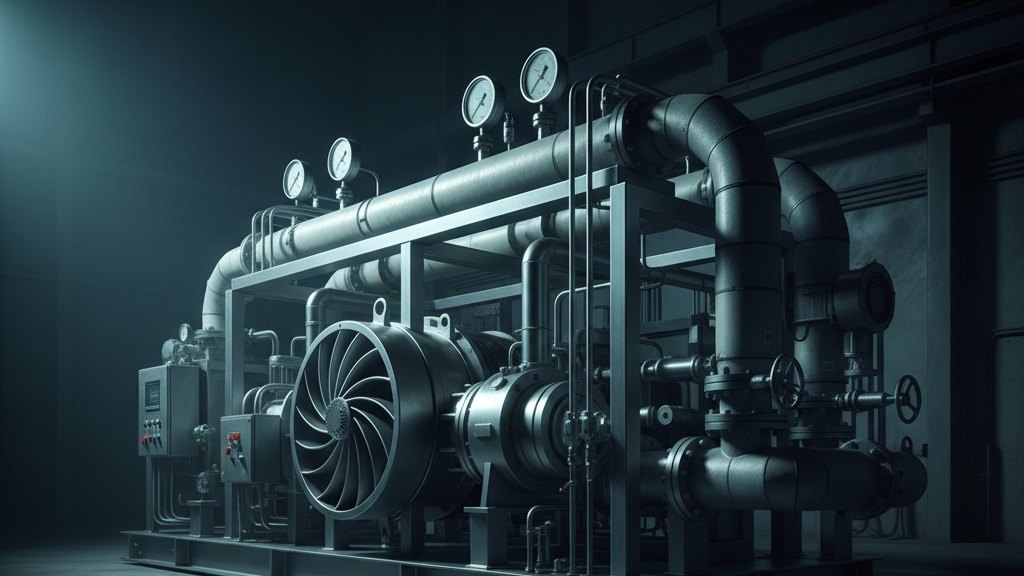
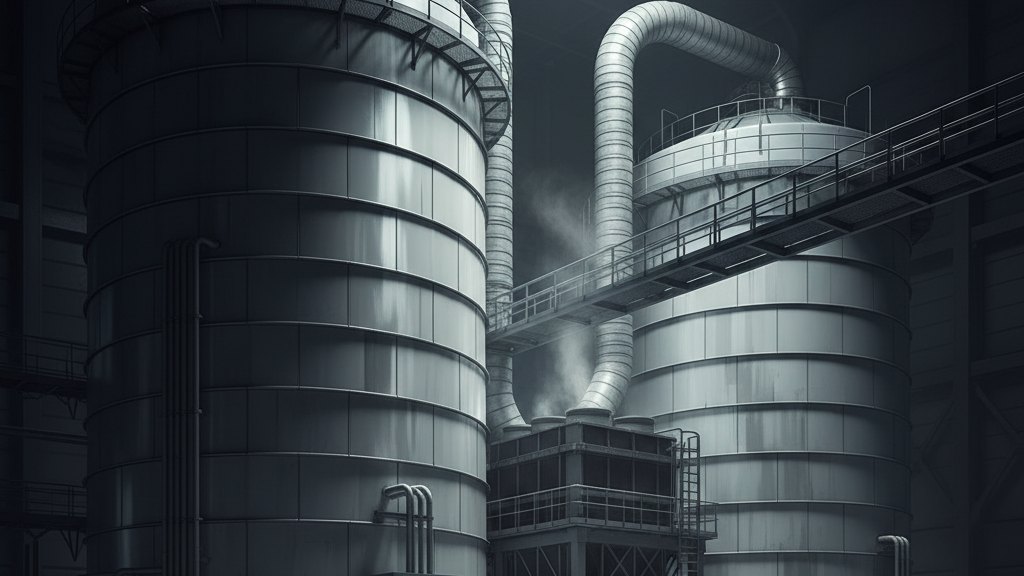
The architecture is deliberately simple: two insulated silos, an electric heater and a heat exchanger. Cool sand moves from a cold silo through the electric heater, where it is raised to temperatures of up to 800 °C, and the heated sand is then held in a hot silo. Heat is recovered by circulating the sand through an external heat exchanger, which the company says delivers steam with up to ten times higher heat transfer efficiency than conventional static storage designs. Output can be taken as steam or thermal oil, and both charging and discharging are described as fully flexible.
The commercial logic is arbitrage on the quality and price of electricity: the system captures power when it is abundant and inexpensive, converts it to high-temperature heat, and releases that heat on demand, independently of real-time generation. TheStorage says the approach can reduce industrial energy costs by up to 70% and cut carbon emissions by as much as 90%. The technology is offered from 20 to 500 MWh of capacity with charging power from 1 to 20 MW, depending on the application.
A Finnish cluster forming around stored heat
The concept emerged in Finland in 2023, with engineering work beginning in 2024 and the first industrial pilot following in January 2026. "Producing steam without fossil fuels is a major step toward carbon-neutral production," said Vesa Peltola, production director of the brewery hosting the pilot. TheStorage's chief executive, Timo Siukkola, framed the gap the company is addressing bluntly: "Companies have wanted to decarbonize for years, but viable solutions simply weren't available."
As Energy Storage News reported on the launch of the industrial-scale system, TheStorage joins a growing Finnish field. Polar Night Energy switched on the world's first commercial sand-based high-temperature heat store in Kankaanpää in 2022, rated at 100 kW and 8 MWh. A 1 MW / 100 MWh system followed as the largest of its kind, and in November the company committed to a 2 MW / 250 MWh sand battery for a district heating provider, which would be the largest sand-based thermal store on completion.
The exergy view
Electric heating is the classic exergy-destroying step: work-quality electricity is converted into heat at a fixed temperature, and whatever exergy the temperature difference cannot carry is lost irrecoverably. The design response is not to avoid the conversion but to keep the delivered heat as high in quality as the process requires. Storing at up to 800 °C preserves a large temperature potential above a steam demand of a few hundred degrees, so the store can meet that demand without the deep degradation that low-temperature storage imposes. Moving the sand through an external exchanger also matters thermodynamically: better heat transfer means smaller temperature differences at the point of delivery, and smaller differences mean less entropy generated per unit of heat supplied. The real gain, however, is temporal — surplus electricity that would otherwise be curtailed retains its usefulness.