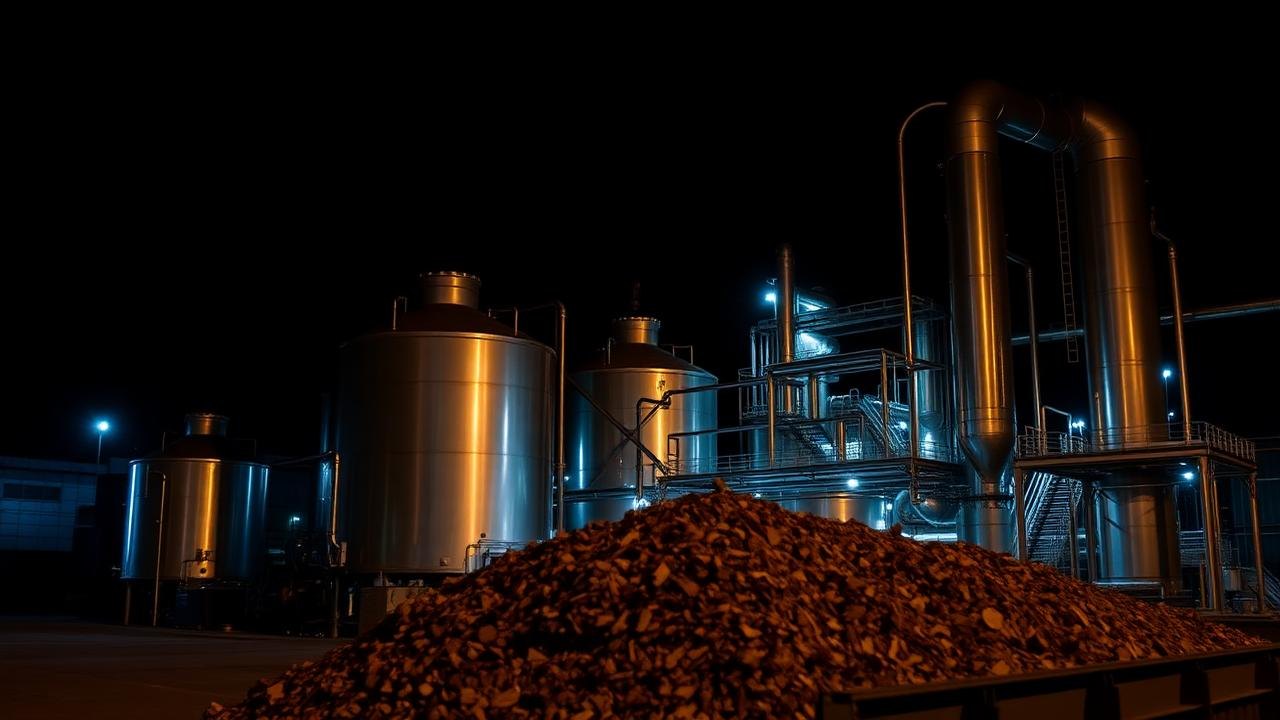
Invasive weeds — water hyacinth, lantana, prosopis and their equivalents — are cleared from waterways and grazing land at public expense, then usually burned or left to rot. The biomass is free at the gate and often carries a negative acquisition cost. This open access study, indexed on PubMed Central, asks whether gasifying it into hydrogen-enriched producer gas makes sense on techno-economic, energy and exergy grounds together.
Why all three analyses are needed
Each framework catches what the others miss. The techno-economic model prices capital, labour, collection logistics and the value of the gas, and it is the only one that can register the feedstock's unusual cost position. The energy analysis establishes the yield. The exergy analysis identifies where the work potential is destroyed — overwhelmingly in the gasification reactor itself, then in gas cooling and clean-up, both of which discard heat at temperatures well above ambient.
Weed biomass makes the exergy question sharper than usual. These feedstocks are high in moisture and ash and low in bulk density. Moisture must be evaporated using heat that could otherwise have driven the endothermic reactions, so a large slice of the input exergy is consumed before gasification properly begins. Ash constrains the operating temperature and complicates clean-up. Low density inflates the transport and handling burden per unit of chemical exergy delivered.
Where it plausibly works
The economics favour deployment at the point of clearance: small, mobile units serving a local heat or power load, not centralised plant fed by long haulage. The value proposition is partly avoided disposal cost rather than the gas itself, which means the case is strongest where clearance is already funded and the gas displaces diesel or LPG.
The exergy view
A free feedstock is a trap for first-law thinking. If the input costs nothing, any output looks like a gain, and low conversion efficiency stops feeling like a problem. The exergy balance restores discipline by pricing the drying, the reactor irreversibility and the rejected clean-up heat against what actually leaves as usable gas. On that basis the design priorities are unambiguous: dry the feedstock with waste heat rather than with fuel, recover the sensible exergy in the raw gas before cooling it, and keep the haulage distance short. Get those three right and a nuisance biomass becomes a modest but genuine local resource. Get them wrong and the plant destroys more work than it delivers, while still reporting a respectable energy yield.